
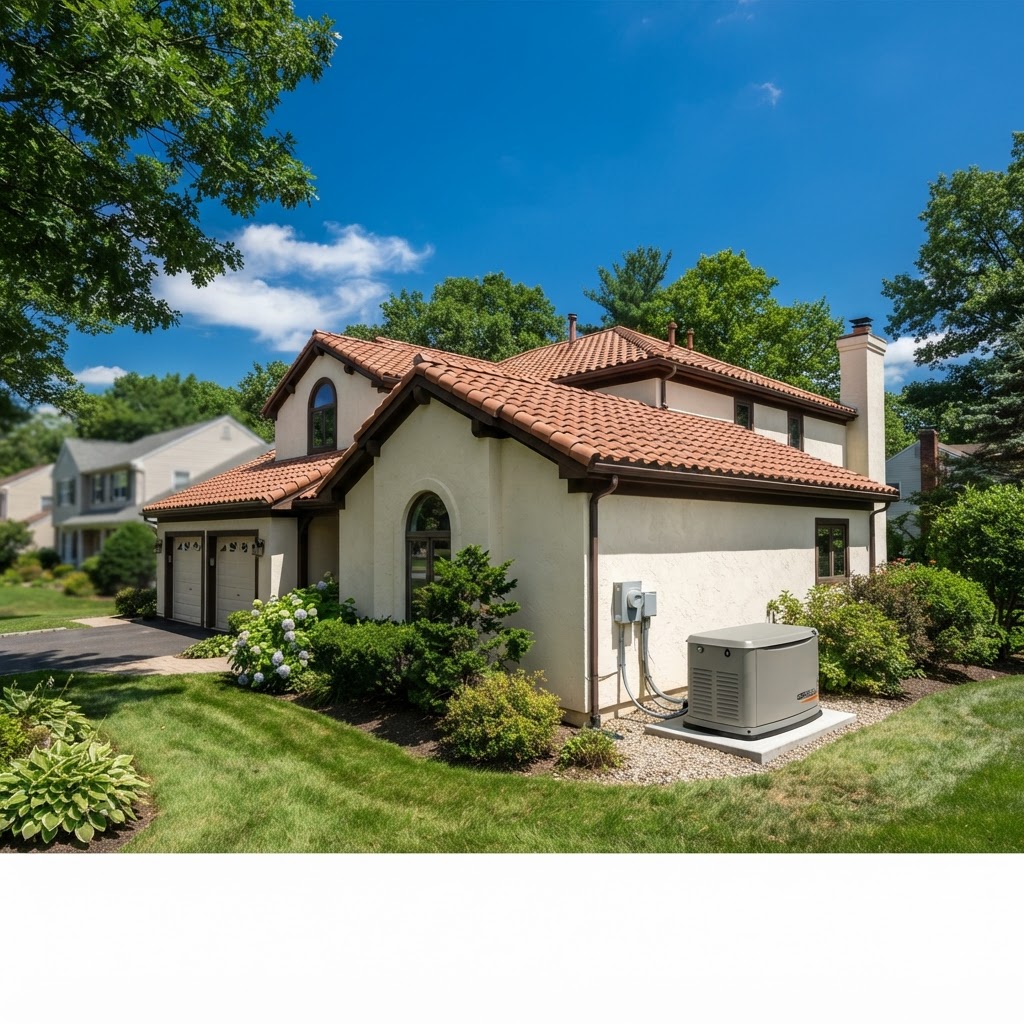
Discover how your home standby generator sustains power during extended outages in Northern New Jersey and why proactive maintenance is key to long-term performance.
What Happens to Your Standby Generator During a Long Power Outage?
During a prolonged power outage, your standby generator automatically engages within seconds of utility grid failure, running continuously to provide essential power to your circuits until utility service is restored. Unlike portable units, a whole house generator connected to your home's natural gas or liquid propane supply remains operational indefinitely, provided it is properly maintained by a professional electrical contractor.
Quick Answer: Generator Performance During Extended Outages
When the grid goes down, an automatic transfer switch (ATS) detects the loss of power, signals your Generac or Kohler generator to start, and transfers your home’s electrical load to the backup power source. It will continue to run for days or even weeks if necessary, as long as it has access to a fuel source and the engine cooling system is functioning correctly.
The Automatic Transfer Switch (ATS) Role
The heart of your system is the transfer switch. It monitors the utility line; when voltage drops below a specific threshold, it signals the generator. Once the generator reaches the correct frequency and voltage, the switch disconnects your home from the grid and connects it to the generator. This prevents dangerous back-feeding and ensures a seamless transition.
Fuel Supply and Runtime Considerations
Most standby generators in Bergen County utilize natural gas or propane. Because these units are plumbed directly into your home's gas line, they do not require manual refueling like a portable gasoline generator. During a long outage, your primary concern should be the engine's oil levels. If the power is out for more than 48-72 hours, it is essential to check the oil level, as prolonged operation will consume lubricant.
Generator Runtime Comparison
| Feature | Portable Generator | Standby Generator |
|---|---|---|
| Fuel Source | Gasoline/Diesel | Natural Gas/LP |
| Runtime | Limited by tank size | Indefinite (with fuel) |
| Operation | Manual | Automatic |
| Safety | Outdoor only | Permanent installation |
Maintenance During Prolonged Use
If you are experiencing a multi-day outage in areas like Paramus or Ridgewood, keep the area around the generator clear of debris. Ensure the air intake and exhaust ports are not blocked by snow or overgrown vegetation. While Vaccarella Electrical Services recommends professional bi-annual maintenance, homeowners should visually inspect their unit for any leaks or unusual noises during extreme weather events.
Common Questions People Ask
- Can my generator overheat? Yes, if intake vents are blocked or oil is low.
- Do I need to turn off appliances? No, your automatic system handles load management.
- How long can it run? It can run for weeks, provided it receives scheduled maintenance.
- Does it shut off when power returns? Yes, the ATS detects utility power and safely switches back.
Expert Generator Installation in Northern New Jersey
At Vaccarella Electrical Services, we specialize in Generac and Kohler installation. Our team ensures your generator is sized correctly for your home’s electrical load, complying with all local NJ electrical codes. If you reside in Franklin Lakes, Fairlawn, or Mahwah and want to ensure your home is protected, contact us today.
Generator Glossary
ATS: Automatic Transfer Switch. Load Shedding: Managing power to prevent circuit overload. Standby: A permanent, hardwired generator. Back-feed: A dangerous condition where a generator energizes utility lines.
Call (201) 966-0019 to request a free quote or visit our website to secure your home with a professional installation today.