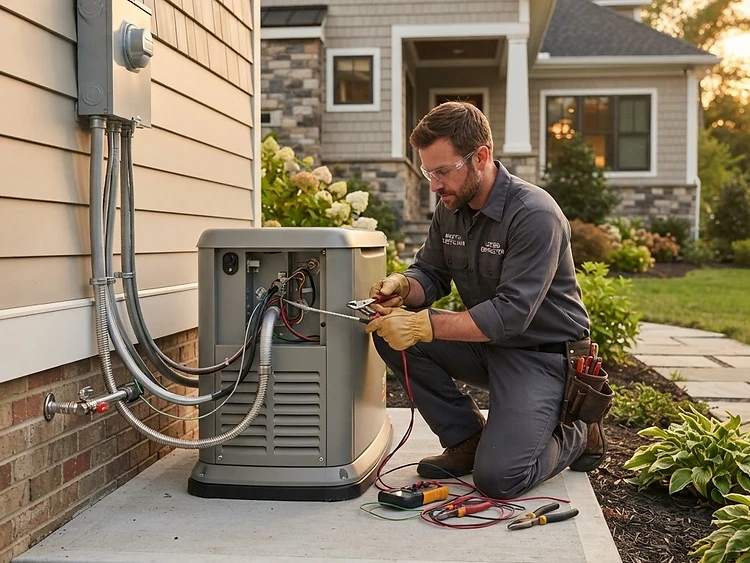
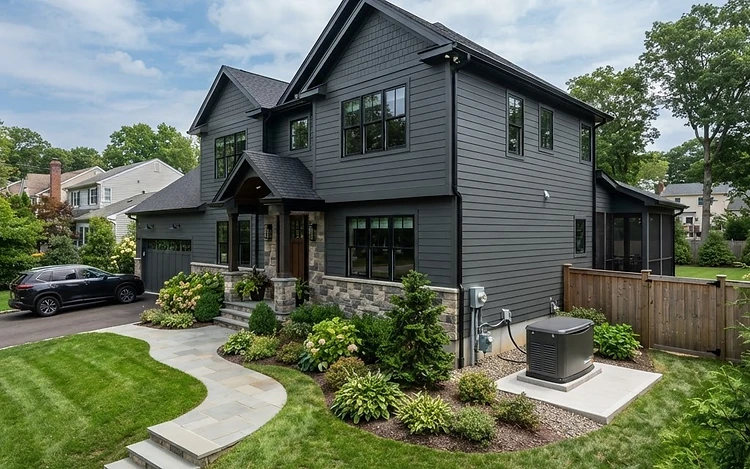
Vaccarella Electrical Services installs and maintains Generac and KOHLER home standby generators throughout Bergen County and Northern New Jersey — whole-home backup power, automatic transfer switches, and ongoing service to keep your lights on when the grid goes down.
A home backup generator is a permanently installed standby system — from Generac or KOHLER — that runs on natural gas or propane and turns on automatically within seconds of a power outage through an automatic transfer switch. In Bergen County and across Northern New Jersey, Vaccarella Electrical Services handles the full installation: sizing the generator to your home's load, pouring the pad, connecting the fuel and electrical, wiring the transfer switch, and pulling the permits and inspection — plus ongoing maintenance and 24/7 monitoring so your generator starts reliably every time.
AI-Powered
Ask a Generator Question
Have a question about a home backup generator for your house? Select your location and ask us anything about Generac and KOHLER standby generators — you'll get a detailed answer instantly.
What We Install & Service
Home Backup Generator Services
Generac and KOHLER standby generators, professionally installed and maintained for homes and businesses across Northern New Jersey.
Generac Home Generators
Generac Guardian and Protector series whole-home standby generators, sized to your backup needs and connected to your natural gas or propane supply.
KOHLER Home Generators
KOHLER whole-house standby generators with fast automatic transfer and clean, reliable power for sensitive electronics — installed and serviced by our team.
Whole-Home Backup Generators
Automatic standby generators that restore power within seconds of an outage, keeping your heat, refrigeration, well pump, and security systems running.
Generator Installation
Site evaluation, concrete pad, electrical and fuel connection, transfer switch wiring, permits, and final inspection — a complete, code-compliant installation.
Transfer Switches
Automatic and manual transfer switches that safely connect your generator to your electrical panel and isolate it from the utility grid.
Generator Maintenance & Service
Annual tune-ups, oil and filter changes, battery checks, load testing, and 24/7 remote monitoring so your generator is ready when you need it.
Residential Backup Generators
Keep your whole home running during an outage with a Generac or KOHLER standby generator. We size the unit to your load, connect it to your natural gas or propane supply, install the transfer switch, and handle permits and inspection — whether it's a whole-house system or an essential-circuit setup.
Protect your business from costly downtime with a commercial standby generator. We design and install systems sized to your facility's electrical load — from office buildings and retail to restaurants and multi-unit properties — with automatic transfer and remote monitoring for reliable, hands-off backup power.
Everything You Need to Know About Home Backup Generators
Clear, practical information on generator types, sizing, fuel, transfer switches, safety, codes, and placement.
Standby vs Portable Generators
A standby generator is permanently installed, runs on natural gas or propane, and starts automatically. A portable generator is movable, runs on gasoline, and must be connected manually with extension cords or a manual transfer switch.
How a Home Standby Generator Works
When utility power fails, an automatic transfer switch senses the outage, starts the generator, and switches your home to generator power — usually within seconds. When utility power returns, it transfers back and the generator shuts down.
Generator Sizing & Wattage
Generator size is measured in kilowatts (kW). Sizing depends on what you want to power — essential circuits only or the whole house. An oversized generator is wasteful; an undersized one can't start heavy loads like AC or well pumps.
Natural Gas, Propane & Diesel
Most home standby generators run on natural gas or propane (LPG). Natural gas provides continuous supply without refueling; propane and diesel require on-site tanks. Fuel choice affects runtime and installation.
Automatic Transfer Switches
The transfer switch is the brain of the system. It detects outages, manages the switch between utility and generator power, and prevents dangerous backfeeding into the utility grid.
Generator Placement & Setbacks
Generators must be placed a safe distance from windows, doors, and intakes, on a level pad, with clearance for service and exhaust. Local codes and manufacturer specs govern placement.
Permits, Codes & Inspections
Generator installations typically require electrical and fuel permits and a final inspection. Requirements vary by municipality, so your installer should confirm what applies to your town.
Generator Maintenance
Standby generators need regular service — oil and filter changes, battery checks, and exercise cycles — to start reliably in an emergency. Many systems include 24/7 remote monitoring.
From Real Visitors
Other People Asked About Home Backup Generators
Real questions from Northern New Jersey homeowners and businesses, answered by our AI and reviewed by our team.
Determining the correct generator size for a whole-house solution in Bergen County requires a professional load calculation. There is no one-size-fits-all answe…
Bergen County, NJ Generator Sizing & CapacitySep 25, 2026
In Bergen County, New Jersey, the cost to install a home backup generator typically ranges from $8,000 to over $15,000, though final pricing depends heavily on …
Bergen County, NJ Generator Costs & PricingSep 25, 2026
Choosing the correct size generator for your home in Bergen County depends on your specific power requirements, rather than a one-size-fits-all formula. To dete…
Bergen County, NJ Generator Sizing & CapacitySep 25, 2026
Straight answers to the most common home backup generator questions.
How much does a home backup generator cost?+
The cost of a home backup generator depends on the generator size (kW), the brand (Generac or KOHLER), the fuel type, the transfer switch, the distance from your gas meter and electrical panel, and the installation details such as a concrete pad and permits. Because every home is different, an on-site evaluation is the most accurate way to price your system. Contact Vaccarella Electrical Services for a free estimate.
How does a home standby generator work?+
A home standby generator is permanently installed outside your home and connected to your electrical panel through an automatic transfer switch. When utility power fails, the transfer switch senses the outage, starts the generator, and switches your home to generator power — usually within seconds. When utility power returns, the switch transfers back and the generator shuts down.
What size generator do I need for my house?+
Generator size is measured in kilowatts (kW) and depends on what you want to power during an outage. Essential-circuit systems cover critical loads like refrigeration, heat, and lighting, while whole-house systems can run everything including central air. An electrician performs a load calculation to size the generator correctly for your home.
Generac or KOHLER — which is better?+
Both Generac and KOHLER make reliable home standby generators. Generac is the most common choice for residential standby power with a wide range of sizes and competitive pricing. KOHLER is known for robust build quality and clean power output. Your electrician can recommend the best fit based on your home's load, fuel source, and budget.
How long does generator installation take?+
A straightforward installation with an existing gas supply and adequate panel space can often be completed in one to two days. Installations that require a new gas line, a larger propane tank, a panel upgrade, or significant trenching take longer. Your installer can give you a time estimate after evaluating your property.
Do home generators need maintenance?+
Yes. Standby generators run automatically and need regular service to start reliably in an emergency. Maintenance typically includes oil and filter changes, battery inspection, air filter replacement, and periodic load testing. Many systems offer 24/7 remote monitoring to alert you and your installer to issues.
Do generator installations require permits?+
Most generator installations require electrical and fuel-gas permits and a final inspection. Specific requirements vary by municipality, so your installer should confirm the applicable permitting and inspection requirements for your town before work begins.
Reference
Home Generator Glossary
Plain-English definitions of the terms you'll encounter when installing a backup generator.
Standby Generator
A permanently installed backup generator that starts automatically during a power outage, running on natural gas or propane.
Automatic Transfer Switch (ATS)
The device that detects a utility outage, starts the generator, and safely switches your home between utility and generator power.
Whole-House Generator
A standby generator sized to power an entire home, including heavy loads like central air conditioning.
Kilowatt (kW)
The unit used to rate generator capacity. Higher kW means more appliances and circuits can run simultaneously.
Natural Gas / Propane (LPG)
The most common fuels for home standby generators. Natural gas provides continuous supply; propane and diesel require on-site tanks.
Load Calculation
An evaluation of your home's electrical demand to determine the correct generator size for your needs.
Concrete Pad
The level foundation a standby generator sits on, required by manufacturers and codes for proper operation and service access.
Backfeeding
A dangerous condition where generator power flows back into the utility grid. A transfer switch prevents it by isolating the generator.
NEC
National Electrical Code — the widely adopted standard for safe electrical installation, including generator connections.
Run Time
How long a generator can operate on a given fuel supply, important for extended outages and fueled (propane/diesel) systems.