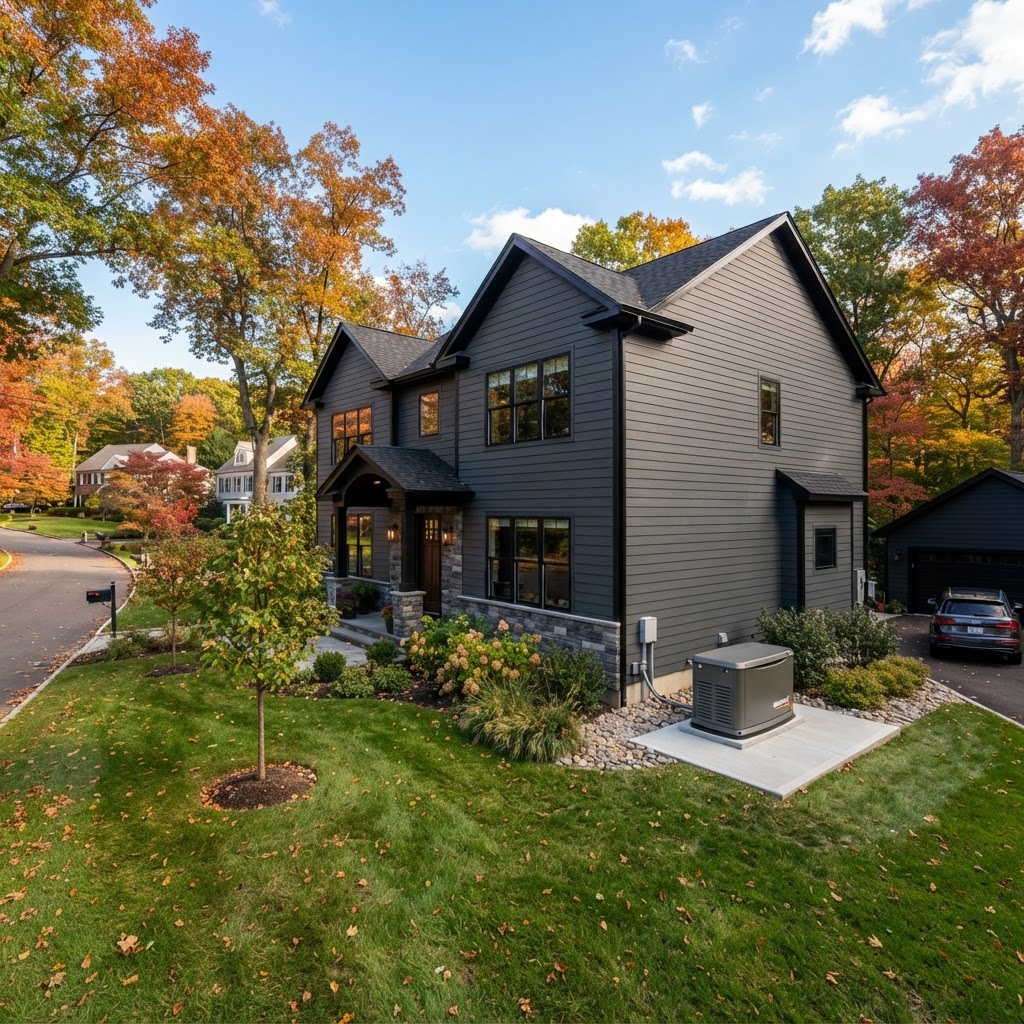
Choosing the right fuel source for your home standby generator is critical for Bergen County homeowners. Learn how natural gas and propane compare for your Generac or Kohler installation.
Quick Answer: Which Fuel Should You Choose?
For most residential properties in Bergen County that already have an existing municipal gas line, natural gas is typically the most convenient and cost-effective fuel source for a standby generator. Propane is the preferred alternative for homeowners in more rural areas or those who do not have access to natural gas infrastructure, offering high energy density and long-term storage stability. Regardless of your choice, a professional generator installation ensures your Generac or Kohler unit runs reliably during Northern New Jersey outages.
The Advantage of Natural Gas in Northern New Jersey
Natural gas is a highly reliable fuel source for standby generator installation in densely populated areas like Paramus, Ridgewood, and Hackensack. Because the fuel is delivered via underground utility lines, you do not need to worry about scheduling fuel deliveries or managing tank levels. This constant supply is ideal for extended power outages caused by severe storms common to Northern New Jersey.
Why Choose Propane for Your Standby Generator?
Propane is an excellent option for properties in areas like Mahwah or Franklin Lakes where municipal gas lines may not reach. Propane is cleaner burning and has an indefinite shelf life, making it a reliable backup even if gas infrastructure is compromised. Our team at Vaccarella Electrical Services, NJ Electrical Contractor #16628, frequently installs propane-powered Generac and Kohler units for homeowners who prioritize fuel security independent of the utility grid.
Comparison Table: Fuel Types at a Glance
| Feature | Natural Gas | Propane |
|---|---|---|
| Fuel Source | Municipal Pipeline | On-site Tank |
| Refill Requirement | None (Constant flow) | Periodic Deliveries |
| Installation Cost | Usually Lower | Higher (Tank installation) |
| Run Time | Unlimited | Limited by tank size |
Generator Sizing and Electrical Load Considerations
Whether you choose natural gas or propane, your whole house generator must be sized correctly based on your home's total electrical load. Our technicians assess your electrical panel and energy demands to recommend the right standby generator installation. Factors such as central air conditioning, heating systems, and high-draw appliances play a significant role in determining if a 20kW, 24kW, or larger unit is required to maintain your quality of life during a blackout.
Maintenance and Reliability for Generac and Kohler Systems
Regular maintenance is essential for both natural gas and propane generators. Propane systems may require more frequent checks on the regulator and tank connections, while natural gas systems require monitoring of gas pressure to ensure the engine runs at peak efficiency. As licensed contractors, we provide comprehensive service to keep your backup power system in optimal condition.
Other Questions People Ask
Do I need a permit for a generator installation in Bergen County?
Yes, all permanent standby generator installations in Bergen County require local building and electrical permits to ensure compliance with safety codes.
Can a generator run on both fuels?
Many Generac and Kohler models can be converted between natural gas and propane during installation, but it must be performed by a professional.
How long will a propane tank last during an outage?
Runtime depends on the size of the tank and the electrical load, but a typical 500-gallon tank can power a home for several days.
Is natural gas cheaper to run than propane?
Generally, natural gas is more affordable per BTU, though local utility rates in Northern New Jersey can vary.
Glossary of Generator Terms
- Transfer Switch: The device that safely disconnects your home from utility power and switches to the generator.
- Standby Generator: A permanent, weather-proof system that automatically engages during power loss.
- ATS: Automatic Transfer Switch.
- BTU: British Thermal Unit, used to measure energy content in fuel.
- Load Shedding: A feature that manages electrical demand to prevent overloading the generator.
Ready to secure your power supply? Contact Vaccarella Electrical Services at (201) 966-0019 or visit our website to request a free quote for your generator installation in Bergen County today.