
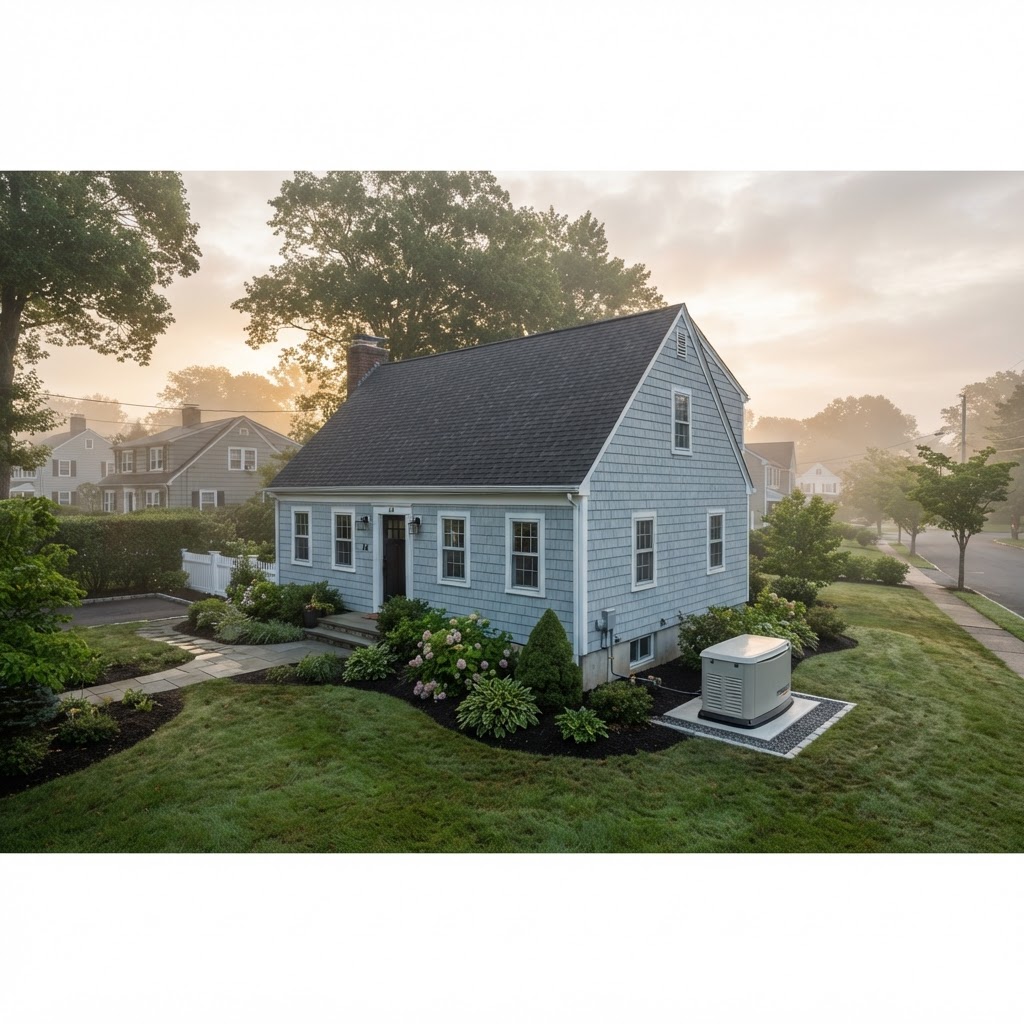
Discover how a whole house standby generator keeps your Northern New Jersey home powered during outages with automatic detection and seamless transfer technology.
Quick Answer: How a Whole House Generator Works
A whole house standby generator works by automatically detecting a utility power failure, signaling an automatic transfer switch to disconnect from the grid, and powering your home's electrical panel via a secondary source—typically natural gas or liquid propane—within seconds.
The Anatomy of a Standby Generator System
A standby generator system is not just a machine; it is a complex electrical ecosystem. The process begins with the automatic transfer switch (ATS), which acts as the brain of the operation. This device monitors the incoming utility power from the grid. When power drops below a certain threshold or disappears entirely, the ATS signals the generator to start. Once the generator reaches the correct voltage and frequency, the ATS safely disconnects your home from the utility line and connects it to the generator, ensuring you never back-feed power into the grid, which is a critical safety requirement in Bergen County.
Automatic vs. Manual Power Detection
The primary advantage of a whole house generator is that it functions entirely automatically. Unlike a portable generator that requires you to go outside in inclement weather to set up, plug in, and start the unit, a standby generator is permanently wired into your electrical system. Whether you are in Paramus or Mahwah, when a Nor'easter knocks out power, your lights, HVAC system, and refrigerator remain running without you ever lifting a finger.
Transfer Switch: The Vital Link
The transfer switch is the most critical safety component of any generator installation. It prevents the generator from sending electricity back onto the utility lines, which protects the utility workers repairing the lines. At Vaccarella Electrical Services, as licensed NJ electrical contractors (Lic. #16628), we ensure that every transfer switch is installed to current NEC (National Electrical Code) standards, providing a safe transition between power sources.
Choosing Between Generac and Kohler
When selecting a system for your home, homeowners often choose between industry leaders Generac generator installation or Kohler generator installation. Both brands offer robust, air-cooled or liquid-cooled units that provide reliable power. Generac is widely recognized for its extensive service network and user-friendly monitoring apps, while Kohler is often praised for its sleek aesthetic and industrial-grade build quality. Choosing the right one depends on your home's total electrical load and available fuel source.
| Feature | Generac Standby | Kohler Standby |
|---|---|---|
| Monitoring | Mobile Link App | OnCue Plus |
| Enclosure | Durable Powder-Coated Steel | Corrosion-Resistant Aluminum |
| Common Use | Residential Whole-House | High-End Residential/Light Commercial |
Fuel Sources for Northern New Jersey Homes
Most standby generators in areas like Ridgewood, Franklin Lakes, and Teaneck run on natural gas or liquid propane. Natural gas is typically the most convenient choice if your home is already connected to the municipal gas line, as it provides an unlimited fuel supply. If your property does not have access to natural gas, a propane tank installation can serve as a dependable, long-term fuel solution.
Maintenance and Longevity
To ensure your generator works when you need it most, regular maintenance is mandatory. This includes oil changes, filter replacements, and testing the battery every 6 to 12 months. Vaccarella Electrical Services provides professional generator maintenance to ensure your unit remains in top condition through every season.
Other Questions People Ask
- Do I need a permit for a generator? Yes, all permanent generator installations in Bergen County require electrical and building permits.
- Can a generator run my central AC? Yes, if the generator is sized correctly to handle the startup surge of your HVAC system.
- How long does installation take? Typically, installation takes one to two days depending on site preparation and electrical work.
- Is my generator safe during a flood? Generators should be installed on a raised concrete pad to protect against high water.
Frequently Asked Questions
1. Will a generator start if I am away from home? Yes, the automatic transfer switch handles the entire startup process independently.
2. Can you install a generator in a compact yard? Yes, we will conduct a site survey to ensure your installation meets local setback requirements.
3. How much noise does it make? Modern standby generators are designed to be relatively quiet, similar to a central AC condenser unit.
4. Do I need to be home for maintenance? For most routine maintenance, exterior access is sufficient.
Glossary of Terms
- ATS (Automatic Transfer Switch): A device that switches power loads between utility and generator.
- Standby Generator: A fixed system that provides backup power to your home automatically.
- Back-feed: A dangerous condition where a generator sends power back into utility lines.
- Load Shedding: A process where the generator temporarily disables non-essential circuits to prevent overloading.
Ready to secure your home's power? Contact Vaccarella Electrical Services at (201) 966-0019 or use our online form to request your free quote for a professional generator installation in Northern New Jersey today.