
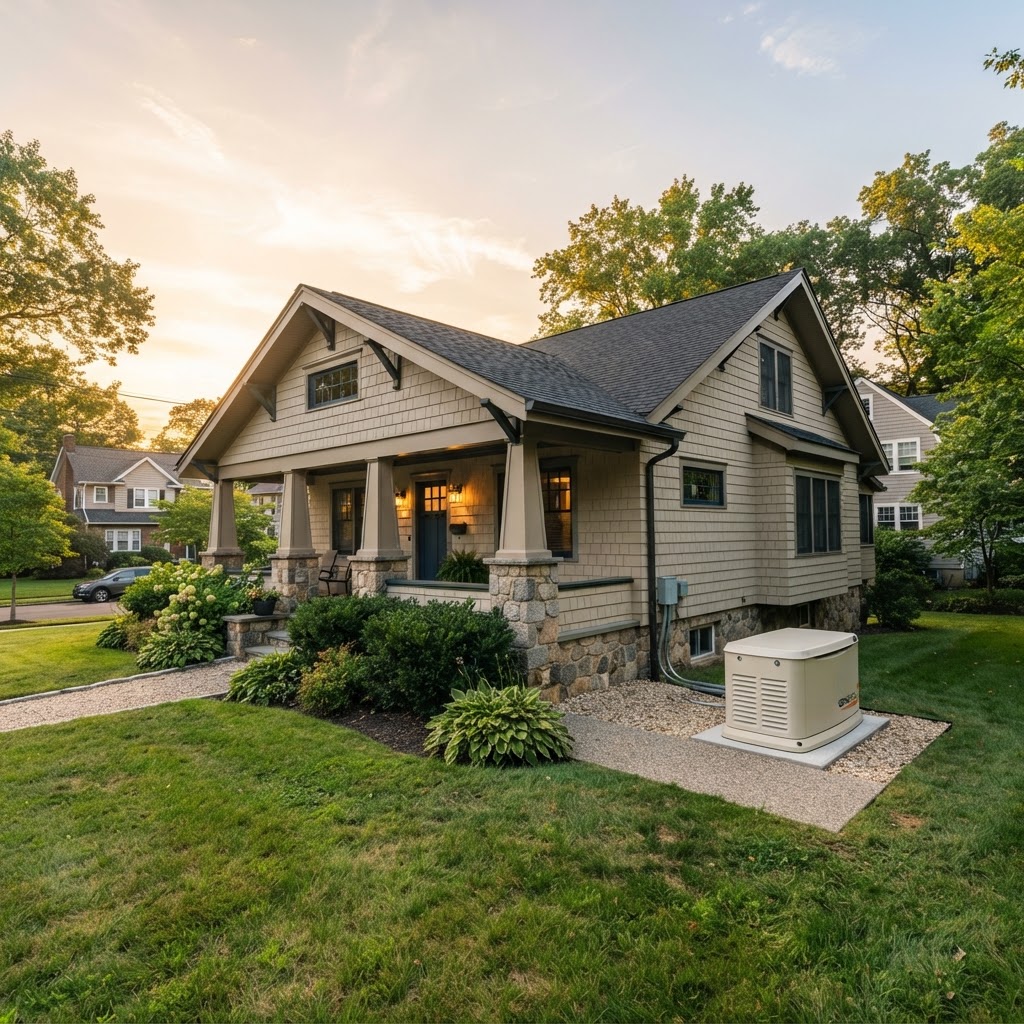
Planning a home generator installation in Northern New Jersey? Learn the critical distance requirements for standby generators to ensure safety, code compliance, and performance.
Quick Answer: Standard Distance Requirements
For most residential Generac and Kohler installations in Northern New Jersey, the National Fire Protection Association (NFPA) 37 code requires a minimum clearance of at least 5 feet from any building opening, including windows, doors, or vents. However, local codes in Bergen County municipalities like Paramus, Ridgewood, or Franklin Lakes may have stricter setback requirements depending on your property lines and local zoning laws.
The NFPA 37 Standard and Home Safety
The primary concern regarding the proximity of a standby generator to your home is carbon monoxide (CO) safety. Because generators burn fuel, they produce exhaust gases that can be lethal if they enter your living space. Installing a whole-house generator too close to a window or an air intake can cause dangerous fumes to circulate indoors. As a licensed electrical contractor (NJ License #16628), Vaccarella Electrical Services ensures every installation complies with manufacturer specifications and safety codes to protect your family.
Why Generator Positioning Matters
Beyond safety, proper positioning affects the longevity and efficiency of your unit. A standby generator needs adequate airflow for cooling. Placing it too close to an obstruction, such as a thick hedge or a wall, can cause the engine to overheat, leading to premature mechanical failure. During a professional Generac or Kohler generator installation, we evaluate the site to ensure the enclosure has enough space to dissipate heat properly while remaining accessible for routine maintenance.
Understanding Local Bergen County Zoning Laws
In addition to safety codes, local ordinances dictate where you can place mechanical equipment. Many towns in Northern New Jersey, including Mahwah, Englewood, and Teaneck, have specific setbacks from property lines. Before installation, we always verify that the generator does not violate local zoning bylaws. A common pitfall for homeowners is placing a unit on a side yard that is too narrow for utility access or fire department requirements.
| Criteria | Standard Requirement |
|---|---|
| Building Openings | Min 5 feet |
| Combustible Walls | Varies (typically 18-36 inches) |
| Air Intake | Clearance required |
| Property Lines | Check local town code |
Maintenance and Accessibility
A generator is a mechanical asset that requires regular oil changes, filter replacements, and battery checks. If your generator is tucked into a tight corner, your technician may struggle to perform these critical services. We always recommend leaving at least 3 feet of clear workspace around the unit. This accessibility ensures that your backup generator is ready to perform when the next Northern NJ storm hits.
Expert Installation with Vaccarella Electrical Services
Vaccarella Electrical Services specializes in turn-key standby generator installation across Northern New Jersey. From pulling the necessary permits in Fairlawn or Hackensack to the final startup, we handle every detail. If you are considering a Generac or Kohler system, contact us at (201) 966-0019 or request a free quote via our website to get started.
Other Questions People Ask
- Do I need a permit for a generator in NJ? Yes, all permanent standby generator installations in Bergen County require electrical and building permits.
- How noisy is a standby generator? Modern Generac and Kohler units are designed for quiet operation, typically comparable to a central air conditioner.
- Can I install the generator myself? No, professional installation by a licensed contractor is required for safety and warranty compliance.
- Does a generator need a concrete pad? Yes, most manufacturers require a non-combustible, level concrete base for stability.